Ghana Bauxite–Ecobank $250m Deal: Questions to Watch as Awaso Expansion Moves Forward
Ghana Gossips Business Desk | 29 October 2026
Reports published around 27 October have put Ghana’s bauxite industry back in the business headlines after newspapers reported a US$250 million financing agreement involving Ghana Bauxite Company (GBC) and Ecobank Ghana. A 29 October roundup by GhanaGuardian said the agreement was being presented as a major funding deal for the company’s expansion at Awaso in the Western North Region.
The reported amount is substantial, but the public should separate the headline from the details that still need to be confirmed directly. In the sources reviewed for this report, a full joint announcement setting out the facility’s maturity, pricing, security, drawdown conditions and production milestones was not available. Those terms matter because the value of a financing deal depends not only on its size but also on how the money is used, what obligations come with it and whether the planned benefits can be measured.
What has been reported about the deal?
GhanaGuardian’s review of newspaper front pages said The Chronicle reported that Ghana Bauxite Company and Ecobank had completed a US$250 million financing deal, while The Ghanaian Times described it as a landmark agreement. The reports connect the funding with expansion at Awaso. Until a detailed statement is published by the parties, it is sensible to treat the reported amount and purpose as information attributed to those reports rather than assume every contractual detail is public.
Readers should look for a joint statement from GBC and Ecobank, a company filing or a statement from the relevant public body. Such a document should identify whether the facility is a loan, a structured financing arrangement or a combination of instruments. It should also explain whether the full amount is committed immediately or released in stages after conditions are met.
Why Awaso matters to Ghana’s bauxite strategy
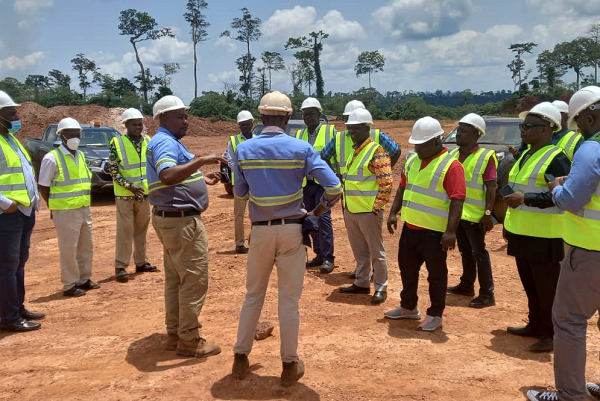
Awaso is Ghana’s only operating bauxite mine, according to the Ghana Integrated Aluminium Development Corporation (GIADEC). GIADEC describes the mine as a long-running operation and says bauxite is transported by road to the Port of Takoradi for export. The resource is therefore important not only to the mining company but also to transport, port operations, local suppliers and Ghana’s wider ambition to develop an integrated aluminium industry.
GIADEC’s public material also describes a broader value chain: mining bauxite, refining it into alumina, and using alumina to produce aluminium and downstream products. These are different industrial steps, each requiring separate infrastructure, energy, technical skills and investment. A financing announcement for mine expansion should not automatically be interpreted as confirmation that an alumina refinery or smelter is funded, approved or ready to operate.
Financing is not the same as additional production
A funding facility can help a company buy equipment, improve handling systems, maintain machinery, expand working areas or strengthen logistics. But the amount borrowed is not itself proof that output will rise. To judge whether the project is delivering, the public will need measurable targets: current production, planned capacity, equipment delivery dates, operational milestones and the time expected for each stage to come on stream.
It is also important to distinguish a target from an achieved result. If a company announces a future annual production capacity, that figure is a plan until it is supported by operating data. Mine output can be affected by equipment reliability, ore quality, haulage capacity, port logistics, maintenance, energy, weather and market demand. An expansion may take time to deliver even when financing has been secured.
Will more of the value stay in Ghana?
One of the central questions is whether additional investment will deepen local value addition. Exporting raw bauxite can generate revenue, but refining ore into alumina and manufacturing aluminium products can create additional industrial activity. GIADEC’s strategy is aimed at developing more of this chain within Ghana. The financing deal should therefore be assessed against clear commitments about what it funds and how it fits with the longer-term plan.
Local processing is not automatic or inexpensive. A refinery requires dependable power, water, transport, environmental controls, skilled workers, a secure supply of ore and customers for its output. The public should ask whether the reported financing is strictly for mine expansion or whether any portion is linked to feasibility work, infrastructure or downstream processing. These distinctions help avoid overstating what the deal can deliver.
Jobs, suppliers and communities around Awaso
Mining investment can create direct jobs and contracts for transporters, mechanics, construction firms, catering businesses and other suppliers. The size and durability of those benefits depend on procurement choices, the skills required and whether local firms can compete for contracts. Short-term construction work is useful, but permanent skilled employment, training and supplier development are important indicators of lasting impact.
Communities near a mine also need practical information about traffic, dust, noise, land access, water use, rehabilitation and complaint channels. GBC describes community engagement and environmental stewardship in its public materials. The next step is to connect those commitments to visible reporting: how grievances are handled, what community programmes are funded, how land is rehabilitated and what monitoring results are available.
Environmental safeguards should be part of the investment test
Expansion can change the footprint of mining activity. Before new work proceeds, the public should be able to identify the applicable environmental approvals, rehabilitation plans, monitoring responsibilities and arrangements for restoring mined land. An investment should be judged on operational performance as well as the quality of its environmental and community safeguards.
Clear reporting helps distinguish a company’s stated policy from measured outcomes. Useful indicators could include the area rehabilitated, water-management results, incidents reported, community complaints resolved and independent inspection findings where available. The absence of a number in a public report does not prove that a safeguard has failed, but it does limit what readers can verify.
What information should be published next?
The parties could strengthen confidence by releasing a summary of the financing structure, the intended uses of funds, major milestones and the indicators by which progress will be assessed. Where commercial confidentiality prevents disclosure of individual pricing clauses, the company can still explain the facility’s purpose, repayment framework and expected project outcomes at a useful level.
Investors, workers, host communities and the public should also be able to track whether commitments are being met over time. Updates on equipment commissioning, output, local procurement, employment and rehabilitation would make the announcement more meaningful than a one-day headline. If the deal is part of a wider industrial strategy, its relationship to alumina refining and domestic aluminium manufacturing should be made explicit.
Frequently Asked Questions
What is the reported value of the Ghana Bauxite–Ecobank deal?
Newspaper reports summarised by GhanaGuardian on 29 October 2026 described a US$250 million financing agreement involving Ghana Bauxite Company and Ecobank Ghana. The detailed facility terms were not available in the sources reviewed for this article.
Where is Ghana Bauxite Company’s main mine?
GBC operates the Awaso bauxite mine in the Western North Region. GIADEC identifies Awaso as Ghana’s only operating bauxite mine.
Does the financing confirm that Ghana will build an alumina refinery?
No. The reported financing is linked to expansion at Awaso. A refinery is a separate development that requires its own funding, approvals, infrastructure and implementation milestones unless the parties explicitly confirm otherwise.
How can the public assess whether the deal is delivering?
Look for company and regulator updates on production, equipment commissioning, jobs, local procurement, environmental monitoring, rehabilitation and community engagement, rather than relying on the headline financing amount alone.
Sources: GhanaGuardian, 29 October 2026; GIADEC — Existing Operations; Ghana Bauxite Company.
For more Ghana business and national updates, visit Ghana Gossips.
