
Ghana Inflation Rises to 5.5% in October as Transport and Services Costs Increase
Ghana Inflation Rises to 5.5% in October as Transport and Services Costs Increase
Ghana’s year-on-year inflation rate increased to 5.5 per cent in October 2026, up from 5.2 per cent in September, marking the third consecutive monthly increase since July. The latest figures from the Ghana Statistical Service (GSS) show that transport and services costs were important sources of pressure during the period.
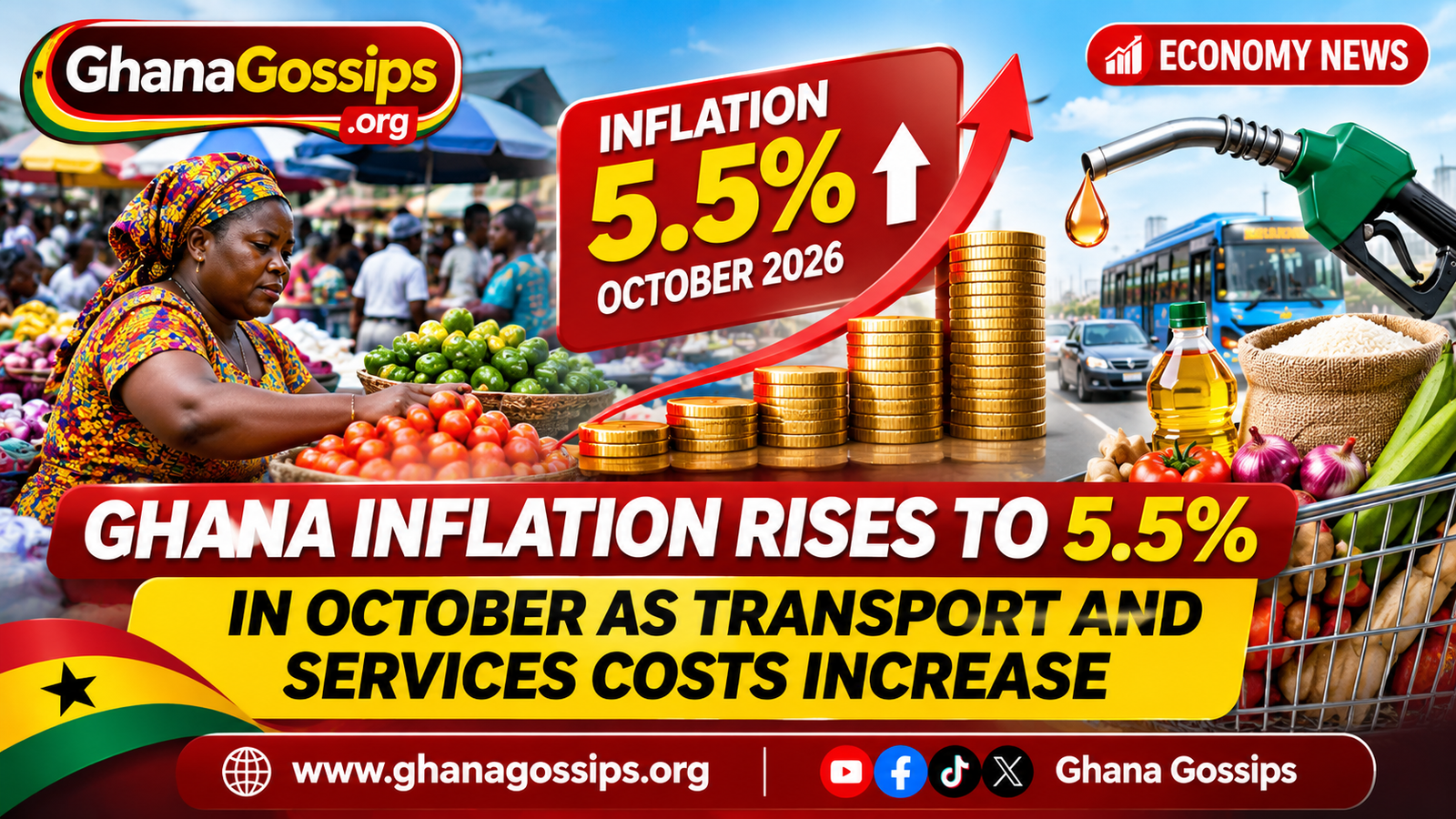
Although the annual inflation rate has risen, the October figure remains below the 8 per cent recorded in October 2025. The latest report therefore presents a mixed picture: inflation is considerably lower than it was a year ago, but some important household expenses are still increasing.
What does 5.5 per cent inflation mean?
Inflation measures the rate at which the general prices of goods and services change over time. It does not mean that every item in the market has increased by exactly 5.5 per cent.
The GSS explained that a basket of goods and services costing GH¢100 in October 2025 would cost GH¢105.50 in October 2026, based on the reported annual inflation rate.
For households, the practical effect depends on what they buy. Families spending a large share of their income on transport, housing, utilities and services may experience a different cost-of-living situation from households whose spending is concentrated on food.
Food inflation offers some relief.
One of the more encouraging developments in the October report was the decline in food prices on a month-to-month basis. Food prices fell by 2 per cent in October after rising by 1.5 per cent in September.
Annual food inflation also eased to 2.8 per cent, compared with 4 per cent in September. The GSS attributed some of the improvement to price declines in selected staples, including maize, local rice and guinea corn.
However, lower inflation does not mean that food has returned to the prices households paid several years ago. It means that the pace of price increases has slowed, or that prices have declined over a particular comparison period.
Transport and services remain major concerns.
Transport recorded the highest divisional inflation rate in the October report at 14.1 per cent. The report also indicated an 8 per cent increase in transport prices during October alone.
Service inflation increased to 11.5 per cent from 8.3 per cent in September. This suggests that households and businesses may continue to feel pressure from expenses that are not captured by food prices alone.
Housing, water and energy also remained significant contributors to overall inflation, with a reported inflation rate of 10.5 per cent.
Why regional figures matter
The national inflation rate does not describe every region equally. The GSS reported regional inflation ranging from 9.7 per cent in the Ashanti Region to negative 0.5 per cent in the Northern Region.
This variation matters because households buy goods and services in local markets, where transport costs, supply conditions and demand can differ.
Businesses operating in different regions should therefore avoid assuming that the national figure fully reflects their individual operating costs.
What households can do
Families can respond by reviewing monthly budgets, comparing prices between shops and markets, planning transport expenses and avoiding unnecessary borrowing for routine consumption.
Small businesses can also review purchasing arrangements, monitor operating costs and use reliable price information when preparing budgets or negotiating contracts.
The latest figures show that Ghana has made progress compared with the inflation rate recorded a year earlier, but the increase from September highlights the need for continued attention to prices.
The next inflation releases will help show whether the recent increase is temporary or part of a longer trend. For now, households should focus on the expenses affecting their own budgets rather than relying on one national percentage.
What Ghana’s inflation figures mean for households
Inflation remains an important economic indicator because it helps households, businesses and policymakers understand changes in the cost of living. When prices rise, consumers may need to adjust their budgets, particularly when spending on transport, food, utilities and essential services.
For reliable information, readers should consult the Ghana Statistical Service, which publishes official inflation and Consumer Price Index reports.
The Bank of Ghana also provides monetary policy updates, economic research and information about developments affecting the Ghanaian economy.
For additional national economic information, visit the Ministry of Finance, which publishes fiscal policy documents, budget statements and economic updates.
Why the Consumer Price Index matters
The Consumer Price Index (CPI) tracks changes in the prices of a representative basket of goods and services consumed by households. It helps measure inflation and provides an important reference for understanding purchasing power.
Readers should distinguish between year-on-year inflation and month-on-month inflation because they measure different periods of price change.
What consumers should watch next
The next inflation releases will help show whether price pressures are easing or increasing. Transport fares, food prices, utility charges and service costs are among the areas households may want to monitor.
External links to include:
FAQ
1. What was Ghana’s inflation rate in October 2026?
The reported inflation rate for October 2026 was 5.5%, according to the figure in this report. Readers should consult the Ghana Statistical Service for the official published rate.
2. What does a 5.5% inflation rate mean?
It means the general price level measured by the Consumer Price Index is 5.5% higher than in the corresponding period a year earlier, if this is the year-on-year rate.
3. Which sectors are associated with the reported increase?
Transport and services costs are highlighted in this report. The official CPI release should be checked for the exact contributions of individual categories.
4. How does inflation affect ordinary Ghanaians?
Inflation can affect household budgets through the cost of food, transport, housing, utilities, healthcare and other everyday services.
5. Does lower inflation mean prices are falling?
No. Lower inflation generally means prices are increasing more slowly. It does not necessarily mean that prices have returned to previous levels.
6. Where can readers find official Ghana inflation statistics?
The Ghana Statistical Service publishes the Consumer Price Index and inflation reports on its official website.
7. How can consumers respond to rising living costs?
Households can review monthly spending, compare prices, plan transport expenses and prioritise essential purchases.
